How do you choose the right mix of play for an indoor park?
Before we choose a slide or draw a climbing wall, let’s talk about the people who will spend an afternoon in your park. That conversation makes the equipment choices much clearer.
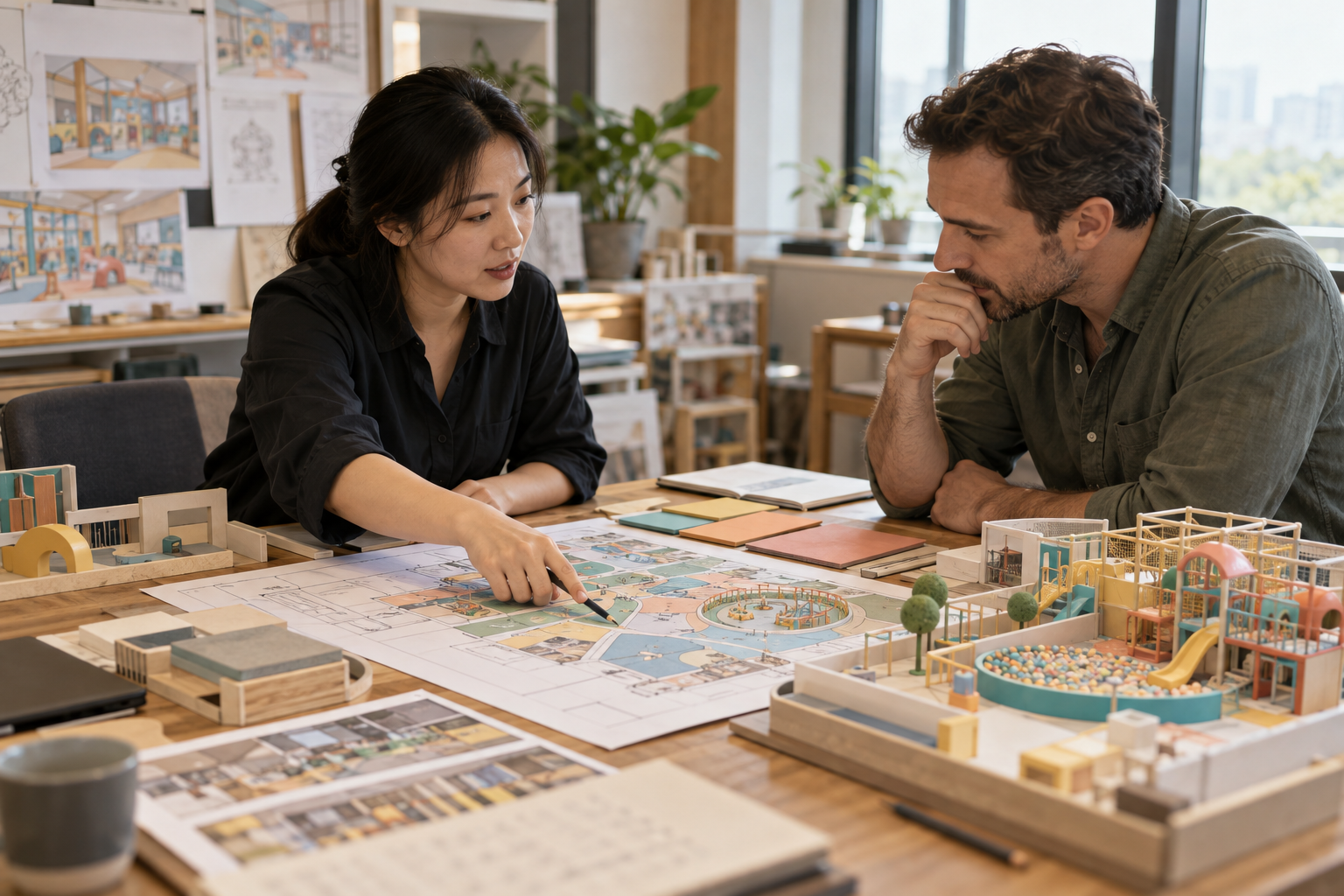
Imagine we are sitting across a table with the plan of your future park between us. You have probably saved a few pictures already: a tall slide, a striking climbing wall, perhaps a play structure filled with children. Where should we begin?
It is tempting to start placing those favourites on the plan. We would take one step back first. Who is coming to this park, what will they enjoy doing together, and what can your team comfortably operate? Once we understand that, we can choose attractions that work together—not just attractions that look impressive on their own.
Start with the people, not the equipment list
Picture a family arriving with a younger child and an older sibling. The younger one may want to crawl, slide and repeat a familiar route. The older one may be looking for a challenge. Their parent needs somewhere to watch, somewhere to rest and an easy way to bring everyone back together.
That small example already gives us a planning brief. We need different levels of challenge, sensible age separation and clear connections between areas. We do not necessarily need a separate attraction for every wish. A well-planned structure can offer several routes and experiences within one footprint.
The building adds another part of the story. A generous floor area with limited clear height suggests different choices from a compact site with useful vertical space. Columns, entrances and sightlines are not details to solve after the exciting equipment has been chosen; they help us choose the equipment in the first place.
A familiar attraction can be the most useful starting point
For a park serving children and families, multilevel soft play can provide a substantial base of activity. Children can move through linked play events, choose a route, return to a slide and keep exploring. Much of the experience happens continuously, rather than as a succession of single turns.
This is one reason the classic playground still matters alongside newer products. Several usable levels can create a lot to do within the available footprint. Compared with activities that require an operator to prepare each participant, non-powered soft play can also be less dependent on one-to-one operation. That does not remove the need for supervision, inspection or cleaning.
So we would ask more than “How big can we make it?” We would look at who it serves, how children enter and leave, what adults can see and how staff reach the equipment. Capacity has to be established for the actual design and operating conditions, not assumed from the size of the picture.


Give each attraction a reason to be there. Then make sure it works with its neighbours.
Then add a different kind of challenge
Once that everyday base is clear, we can ask what is missing. If older children and young people are important to the business, a rope course or a climbing challenge may add something the soft play area does not: a more demanding goal, a different physical experience and a reason to test themselves.
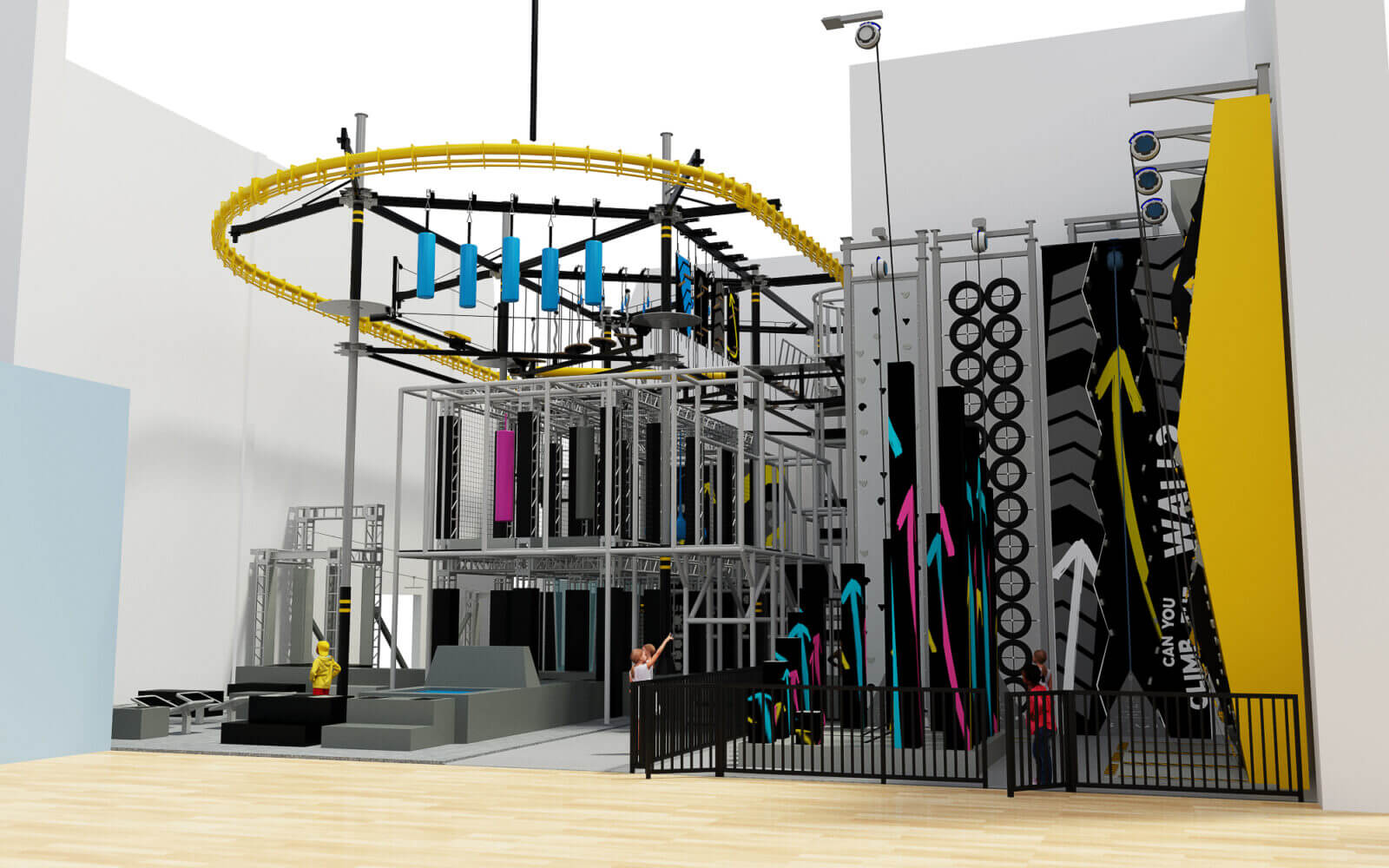
Height can help, too. An aerial route can make the upper part of a building part of the visit, while giving the park a visible focal point. But “above another attraction” does not mean “free space”. Structure, clearances, access and the selected safety system all need to work together.
The same care applies to operations. A harness-based activity may need participant preparation and trained staff. Some climbing products have a different operating model from others. We should understand those differences before choosing how many challenges to include or where to put them.
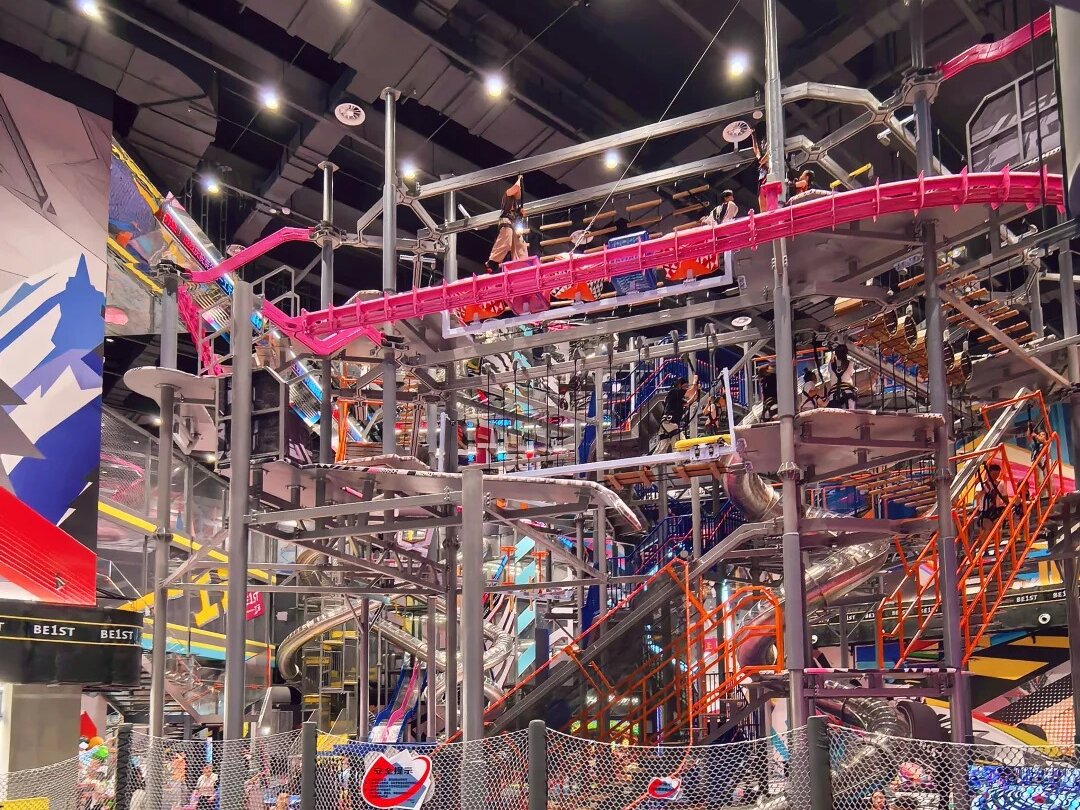
Look up at BE1ST in Shanghai
Rope activities, Rail Fly, nets and slides share a complex vertical space at BE1ST. It is a useful example of planning height as part of the whole experience. The lesson is not to copy every attraction, but to see how routes and activities can be coordinated within a particular building.
Read the full case studyInteractive play should add a reason to participate
Now suppose the mix has exploration and physical challenge, but you want more moments that people can enjoy together. This is where an interactive product can have a clear role. Throwing at a responsive projection, following a game objective or completing a shared challenge changes what visitors do—not just what they see.
Products such as Interactive Games and Super Runio give us ways to combine movement with feedback and goals. We would choose them for the experience they add, then check lighting, power, visibility and maintenance access. A screen placed in a busy route is not automatically a useful interactive attraction.
In Colombia’s Zero Gravity project, trampolines, rope activities, soft play and interactive experiences sit within a broader adventure park. That variety is worth noticing. It allows a change of pace: not every visitor, and not every moment of a visit, needs the highest level of challenge.
Check the combination as an operator would
At this point the plan may look exciting. Before adding another attraction, we would walk through an ordinary busy day in our minds. Where does a queue form? Which activities need help from staff? Can a family move between areas without crossing a line of waiting visitors?
Purchase cost is only one part of this discussion. An attraction also brings daily work: opening checks, cleaning, helping guests and replacing wear items. A good combination balances the experiences you want to offer with the operation you are prepared to run. The questions below are more useful than a universal “ideal” equipment ratio.
| Look at | Ask yourself | What this changes |
|---|---|---|
| Capacity & queues | Where will visitors stay longer, and where will they wait for a turn? | Continuous play, turnover and waiting space need to be considered together. |
| Staff involvement | Which experiences need preparation, instruction or close assistance? | Match the layout and operating procedures to the particular equipment. |
| Daily care | Can the team reach the areas it must inspect and clean? | Keep maintenance access in the layout, not just in the manual. |
Actual capacity, staffing and safety measures depend on the equipment, manufacturer instructions, site and applicable requirements.
Leave room for the rest of the visit
Let’s return to that family at the entrance. After an hour of play, someone needs a drink, someone wants a break and someone still wants another turn. Seating, food service and clear meeting points are part of their experience, even though they are not play equipment.
We would therefore consider parent seating, party use, storage and staff access while planning the attractions—not fit them into whatever floor area happens to remain. A café may benefit from a view of the action; its queue should not obstruct the route into a play zone. A party group needs a way to arrive and regroup without disrupting everyone else.
There is more to say about these supporting spaces than one article can cover. For this first conversation, the important point is simple: a park is a complete visit, not just the time spent on equipment.
You do not need every answer before we start
If you are planning your first park, you may not yet know which attractions to choose. That is a reasonable place to begin. Tell us who you hope to welcome, where the project will be and what matters most to your business. If you have a floor plan and clear-height information, bring those too.
From there, we can compare options, decide what each area needs to do and develop a layout that connects them. A memorable park rarely comes from selecting the largest number of interesting products. It comes from choosing a useful combination, then working carefully on how people experience it.
Before your next planning conversation
Describe your main visitors, the space you have and the kind of day you want them to enjoy. You do not need to arrive with a finished equipment list.