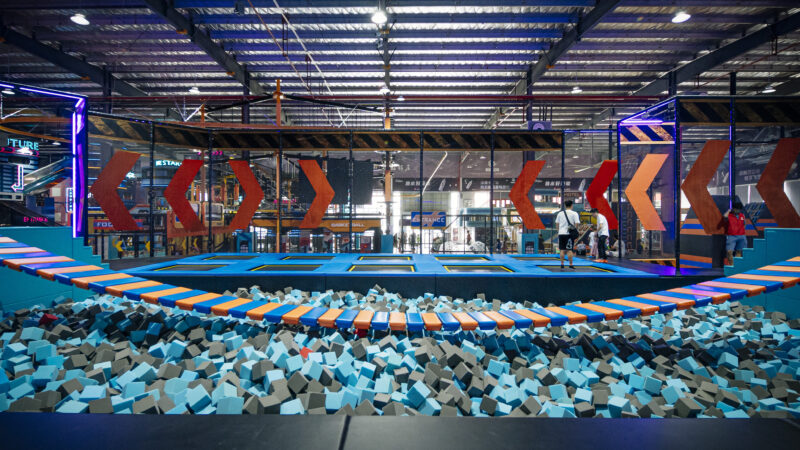
Choose a supplier who connects your venue concept with a workable delivery plan.
A commercial trampoline park supplier should be evaluated as a project partner, not only as a source of trampoline components. The supplier should help translate the venue concept and site constraints into an activity mix, capacity plan, age strategy, technical package, installation scope, and maintenance approach. Structural, fire, building, and operating requirements must then be coordinated with the appropriate local professionals and authorities for the project location.
Start by deciding what role trampoline activities will play. A trampoline-led venue, an active entertainment center, and a trampoline zone inside a larger FEC have different space, staffing, visitor, and revenue needs.
The concept affects whether the plan emphasizes main courts, performance zones, basketball, dodgeball, airbag or foam landing, climbing, Warrior Courses, Interactive Sports, party areas, or family support spaces.
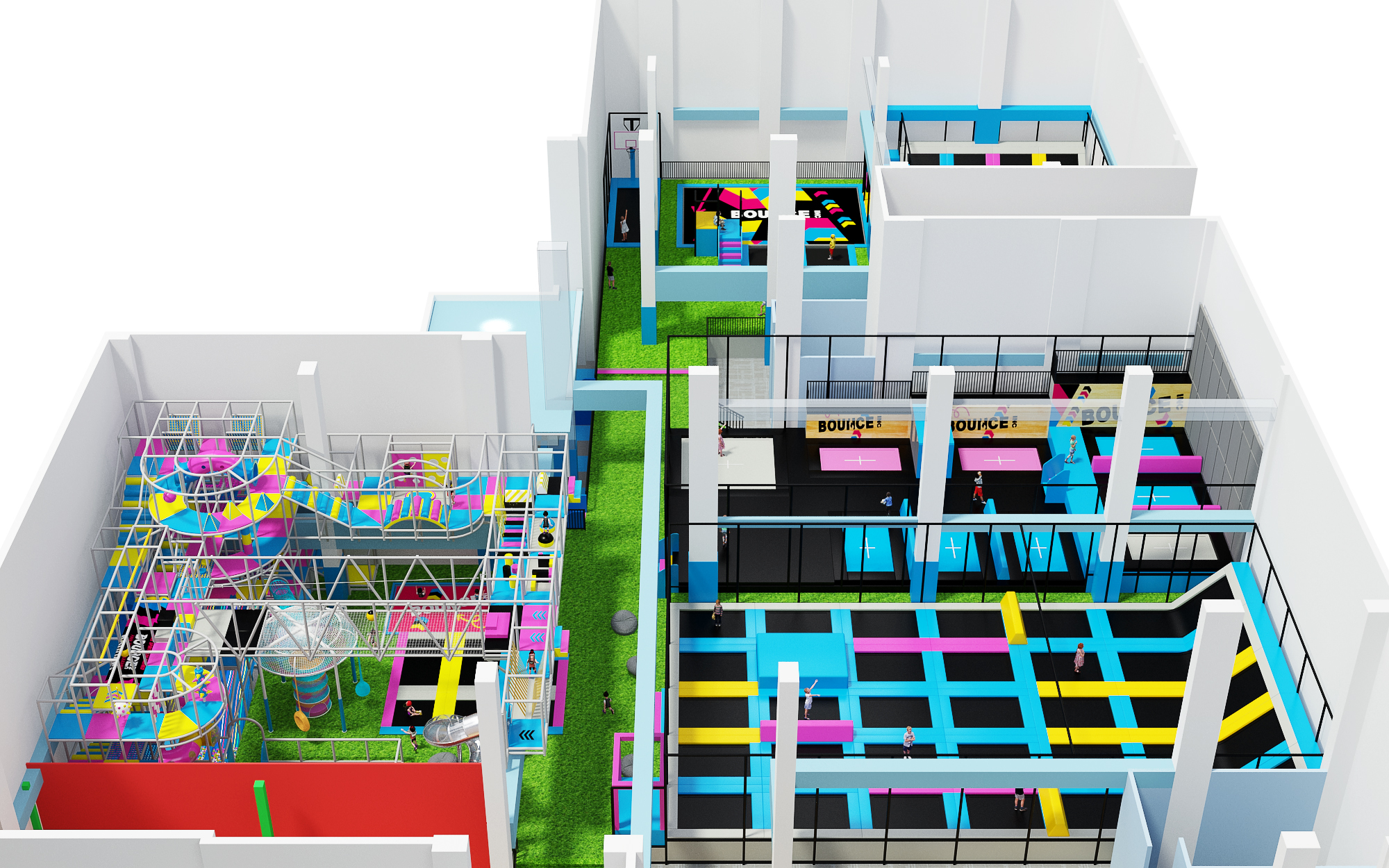
Provide accurate dimensions, clear height, column grid, entrances, exits, slab and structural information where available, and the intended relationship with surrounding spaces. The layout must reserve practical circulation, supervision, access, queuing, and maintenance routes rather than filling every square meter with equipment.
An effective mix should fit the target customer rather than follow a generic catalogue. Families may need clearer age zoning and parent visibility. Teen and young-adult venues may benefit from challenge, competition, and interactive scoring. FEC operators may use trampoline activities as one part of a wider repeat-visit journey.
Ask the supplier to explain the role of each activity, its intended users, approximate capacity logic, supervision requirements, and how it connects to adjacent zones.
Clearer age zoning, parent visibility, and practical supervision.
Challenge, competition, and interactive scoring.
Trampoline activities as one part of a wider repeat-visit journey.
Defined role, intended users, capacity logic, supervision, and connection to adjacent zones.
Safety competence should be tested when selecting a supplier, not left as a final paperwork check. Ask which trampoline-park standard applies in the target market and how it affects design, manufacturing, installation, inspection, operation, and maintenance. Current reference examples include EN ISO 23659:2022 for European trampoline parks and ASTM F2970-25 for U.S. commercial trampoline courts.
A credible supplier should connect applicable requirements to drawings, calculations, material and component records, padding and impact attenuation, containment, labels, manuals, and inspection evidence—not merely state “EU and US standards.” It should also distinguish trampoline areas from climbing, obstacle, rope, and other attractions that may require different standards. EN ISO 23659 does not replace general building, fire, or planning rules, while U.S. state and local requirements may add approvals.
Responsibilities remain shared: the equipment supplier provides agreed product documentation and installation information; the client and local team coordinate building, structural interfaces, fire protection, MEP, permits, inspections, and operating approvals. A mature process keeps documents, manufactured equipment, and the installed result consistent. It does not rely on one broad certificate or one approval route worldwide.
Durability is not defined by one material name. Review the complete system: frames, beds, pads, connections, finishes, high-wear areas, access for inspection, replacement parts, and the operating environment. Ask how production checks, pre-shipment inspection, installation records, and maintenance information are controlled.
Evidence request example: Ask the supplier to show how an approved equipment drawing connects to the corresponding inspection record and maintenance instruction. Check that each document identifies the same product and agreed scope; a generic certificate alone does not explain that connection.
Before shipment, confirm who is responsible for unloading, storage, local labor, tools, lifting, power, access, waste removal, supervision, and final site coordination. A technically complete equipment package can still be delayed by an unprepared site or unclear responsibility.
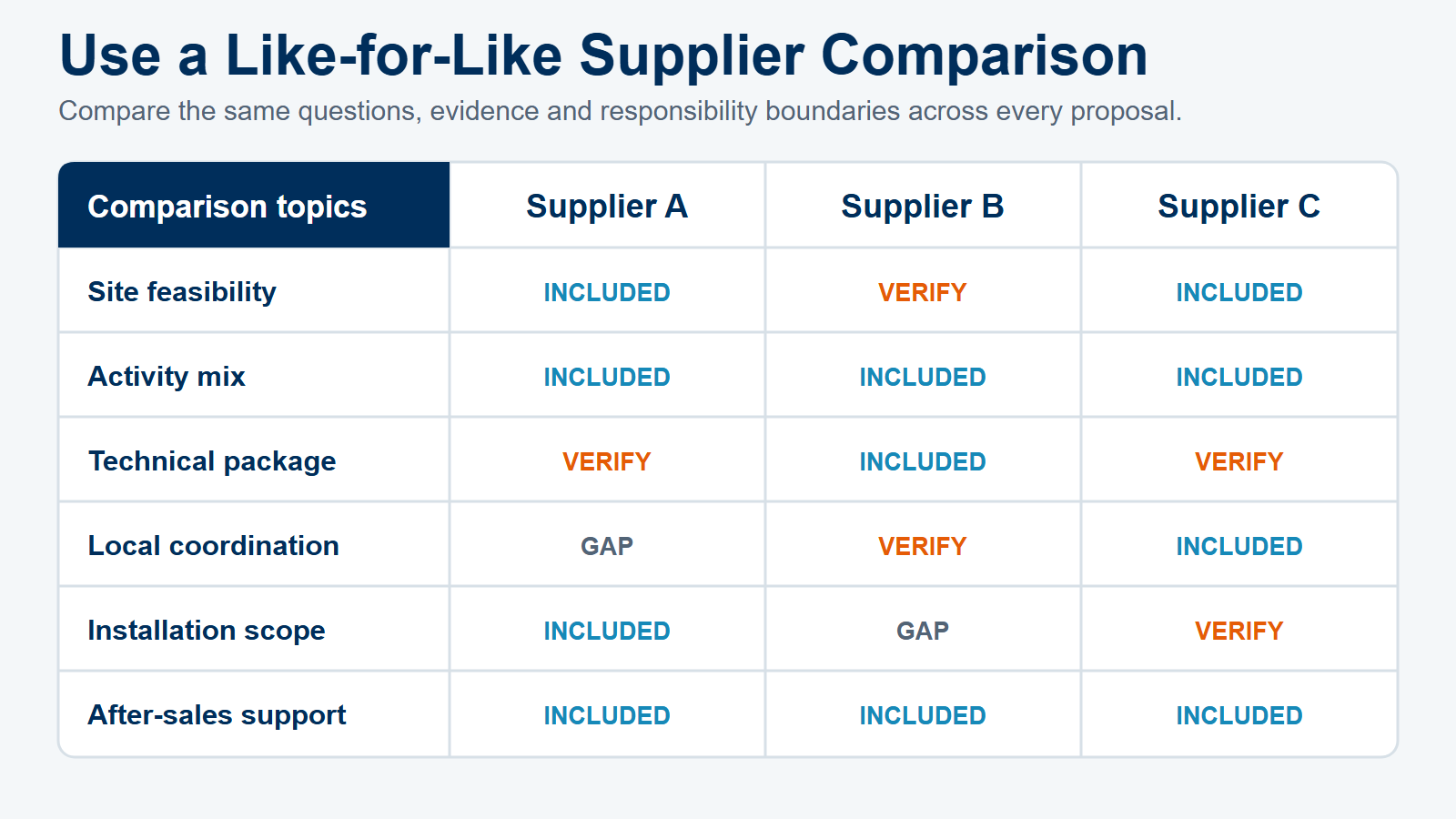
| Topic | Questions to compare |
|---|---|
| Venue concept | Who are the users and what role does trampoline play? |
| Site | Are dimensions, heights, columns, access, and interfaces reviewed? |
| Activity mix | Why is each activity included and how does it support the venue? |
| Technical package | Which drawings, calculations, manuals, and labels are included? |
| Local coordination | What requires local engineer, contractor, inspector, or authority input? |
| Manufacturing | How are approved drawings and production kept consistent? |
| Installation | What is included, excluded, and required from the client? |
| After-sales | How are inspection, maintenance, parts, and questions supported? |
Send a floor plan, clear height, site photos, location, target age groups, preferred activities, expected capacity or visitor profile, budget range, desired opening date, and available building information. Explain whether this is a new venue, an extension, or an upgrade.
Review Funlandia’s Trampoline Park page for the core product scope and Adventure Park Solutions for a broader active-entertainment mix. Case Studies can help compare venue types and operating objectives.
There is no single answer for every activity and market. The supplier should review the proposed activity, equipment geometry, user movement, building conditions, and local requirements before confirming suitability.
Often yes, but the existing site, circulation, structure, fire systems, supervision, and neighboring activities need to be reviewed before a layout is confirmed.
The quotation should identify equipment and activities, design scope, technical documents, finishes, freight responsibilities, installation or supervision, exclusions, and client-provided work.
Responsibility depends on the project and jurisdiction. The supplier should provide the agreed product documentation, while the client typically coordinates local professionals, contractors, inspectors, and authorities.
Plan access, inspection routines, record keeping, staff responsibilities, replacement parts, and supplier support before opening, not after wear becomes visible.
Share your floor plan and venue concept through Funlandia Contact to discuss site feasibility, activity mix, scope, and the information needed for a commercial proposal.
Fill out the form below and we'll get back to you within 24 hours.