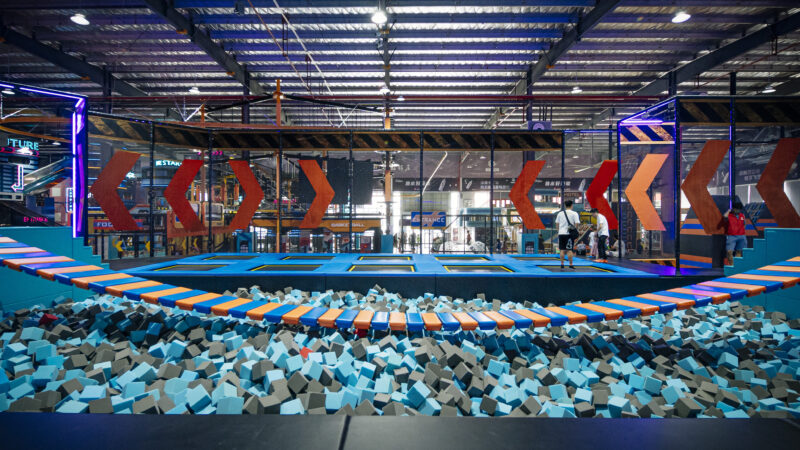
See how a commercial indoor entertainment project moves from brief and floor plan through design, manufacturing, delivery, installation support, and opening readiness.
A turnkey indoor entertainment project is not a promise that one supplier performs every local task. It is a coordinated delivery process with defined stages, inputs, deliverables, decisions, and responsibility boundaries. A strong process connects project brief, site review, concept and product planning, technical coordination, scope and quotation, manufacturing, logistics, installation support, documentation, and opening preparation while keeping local architects, engineers, contractors, inspectors, and authorities properly involved.
Each stage has a defined decision and responsibility gate. Several workstreams may overlap, but unresolved inputs should remain visible rather than being silently carried forward.
The brief should define the venue concept, target customers, project location, site status, area and height, desired products, budget range, target opening date, and decision makers. It should also clarify whether the immediate need is feasibility, lease support, investor presentation, detailed design, or an executable supply package.
The team reviews dimensions, columns, access, exits, neighboring uses, building services, circulation, and available technical information. Missing inputs are recorded early. Local professionals confirm building, structural, fire, accessibility, MEP, permit, and authority requirements.
The concept connects brand positioning, visitor journey, age zones, capacity, supervision, and attraction mix. Depending on the venue, this may combine الملاعب الداخلية, حديقة الترامبولين, حلول حدائق المغامرات, interactive attractions, toddler play, and support areas.
Concept decisions are developed into the agreed drawing and equipment package. Key interfaces, supplier inputs, product parameters, site conditions, and responsibility boundaries need to be closed before manufacturing. The استوديو تصميم Funlandia and تصميم قائم على المنتجات pages explain two different design routes.
The proposal should identify inclusions, exclusions, client-provided work, local professional services, freight responsibilities, installation scope, documents, schedule assumptions, and revision rules. Approved changes should be recorded rather than handled through informal messages.
Approved information must remain consistent through drawings, production, inspection, packing, manuals, labels, and installation information. Where applicable, material and component records should be traceable to the supplied product. Internal checks before shipment reduce avoidable site corrections.
Shipment planning and site readiness run in parallel. The client and local team confirm access, unloading, storage, local labor, tools, power, lighting, fire systems, flooring, structural and building work, and the installation schedule.
Installation follows the approved package and records changes. Before formal inspection or opening, the team checks visible completion, access, padding and protection, labels, manuals, operational information, outstanding work, and local inspection requirements. Findings are closed through a documented correction process.
The same approved project information should remain connected from floor plan and concept through production, installation, documentation, and the completed venue.
| Workstream | Funlandia / supplier | Client | Local professionals / authorities |
|---|---|---|---|
| Project brief | Guide inputs and clarify scope | Provide business and site decisions | Advise on local project constraints |
| Product/design package | Develop agreed concept and product information | Review and approve | Coordinate architecture, structure, MEP, fire, permits |
| التصنيع | Produce to approved supplier scope and complete internal checks | Approve changes and payment milestones | Participate where project-specific review is required |
| Site preparation | Provide equipment interface requirements | Organize access, local works, utilities, storage | Design/execute/approve local work |
| Installation and handover | Supply agreed installation support and product documents | Coordinate local team and operations | Inspect or approve as required locally |
At minimum: accurate site information, a decision maker, budget direction, timely approvals, local professional contacts, local requirements, site-readiness confirmation, and a clear record of changes. A turnkey process moves faster when decisions and responsibilities are visible.
See selected دراسات حالة for examples of project objectives and solutions, and التحميلات for company and product resources.
No. The exact scope must be agreed. Local permits, building work, engineering, fire review, inspections, and authority approvals commonly require the client and licensed local professionals.
Manufacturing should begin after the relevant scope, drawings, finishes, interfaces, commercial terms, and change rules are approved.
Early feasibility or concept work may be possible, but its purpose, assumptions, deliverables, and fee boundary should be defined. It is different from an executable project package.
Incomplete site information, late approvals, unclear local responsibilities, uncontrolled changes, unready sites, and missing inspection or documentation requirements are common causes.
The project team should check installation completion, outstanding corrections, product and operational information, local inspection requirements, staff readiness, and the agreed handover documents.
Have a confirmed site or a serious feasibility brief? Start a discussion with Funlandia about the design route, project scope, responsibilities, and delivery sequence.
املأ النموذج أدناه وسنعود إليك خلال 24 ساعة.