PLANNING INSIGHTS · FUNLANDIA
A distinctive park is not simply a room filled with different products. It is a connected journey: a reason to enter, clear choices of challenge, places to pause, and a visual identity that holds the experience together.
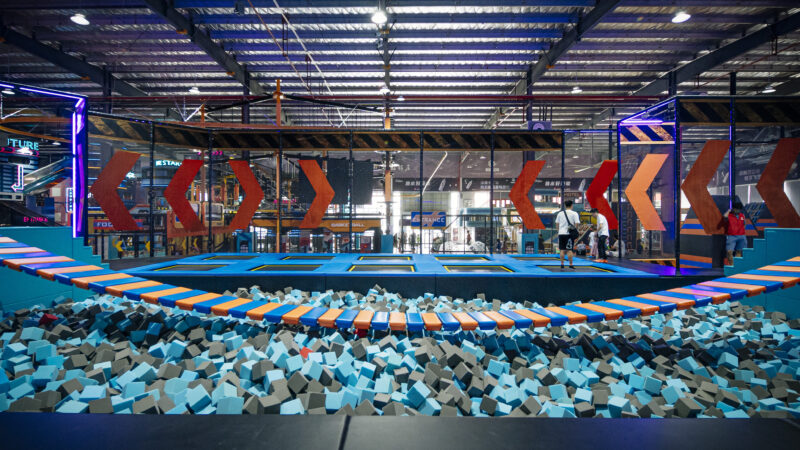
Define the main visitor groups before choosing attractions. Young children, older children, families and active adults do not need identical routes or levels of challenge. Consider where they play together, where experiences should separate, and where accompanying adults can observe.
Then map the site constraints: entrances, columns, clear height, circulation, service access and the relationship between activity areas. An exciting product mix still needs a layout that people can understand and use.
Choose one or two anchor experiences that express the park’s character. Around them, add complementary activities: exploration, climbing, sliding, jumping or game-based challenges. Ask what each activity adds and how a visitor moves naturally to the next one.
A quieter or lower-intensity zone may be as important to the overall experience as the most dramatic attraction. The objective is variety with a purpose, not the largest possible equipment list.
AILAND in Kazakhstan is a phased project for which Funlandia has provided an overall design-to-delivery solution. Its first phase has opened. A central multi-level tower connects different elevated experiences and viewpoints.
The useful planning question is how a recognizable central feature can organize the wider park: what guests see first, how they reach different experiences, and how the parts relate to one another. A central landmark should help people understand the park, not only attract a photograph.
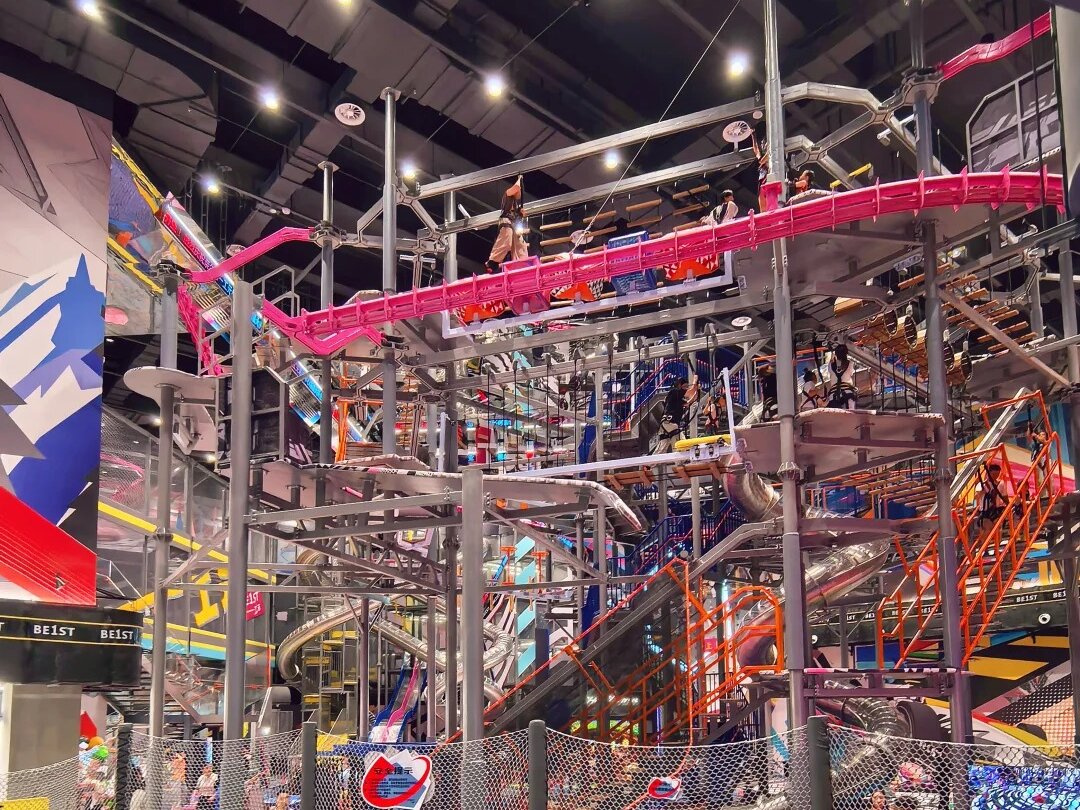
At BE1ST in Shanghai, a ring-shaped dual-track Rope Course, a surrounding Rail Fly experience and layered attractions turn a complex vertical space into a connected Adventure Play environment. Trampoline, Rainbow Net, slides and Ninja Courses add different kinds of movement.
The project illustrates the coordination required between routes, platforms, structures and the space below. Its integrated design brings different activities together while making effective use of a complex vertical space.
Use a consistent visual language across entrances, structures, surfaces and key moments. Theme and color should reinforce the chosen experience rather than compete with it. A strong spatial identity can come from a coordinated palette and clear forms as well as from a detailed story.
Review the proposed attraction mix against the building, installation access and local project requirements before the layout becomes difficult to change. Confirm responsibilities and technical assumptions with the relevant teams. Do not treat a concept rendering as a completed engineering solution.
For an early discussion, bring your floor plan, clear height, audience, preferred atmosphere and any must-have experiences. These inputs help turn inspiration into a practical brief.
املأ النموذج أدناه وسنعود إليك خلال 24 ساعة.